Fishing the Chattahoochee at Island Ford, and where to eat after
Twenty miles from downtown, the Chattahoochee runs cold enough off the bottom of Lake Lanier to hold trout all year, and the National Park Service owns the banks at Island Ford for $5 a day. Wild browns, stocked rainbows, a trout stamp, and a life jacket. A guest guide from Smells Like Fish, ending at the three Roswell tables on the road home.
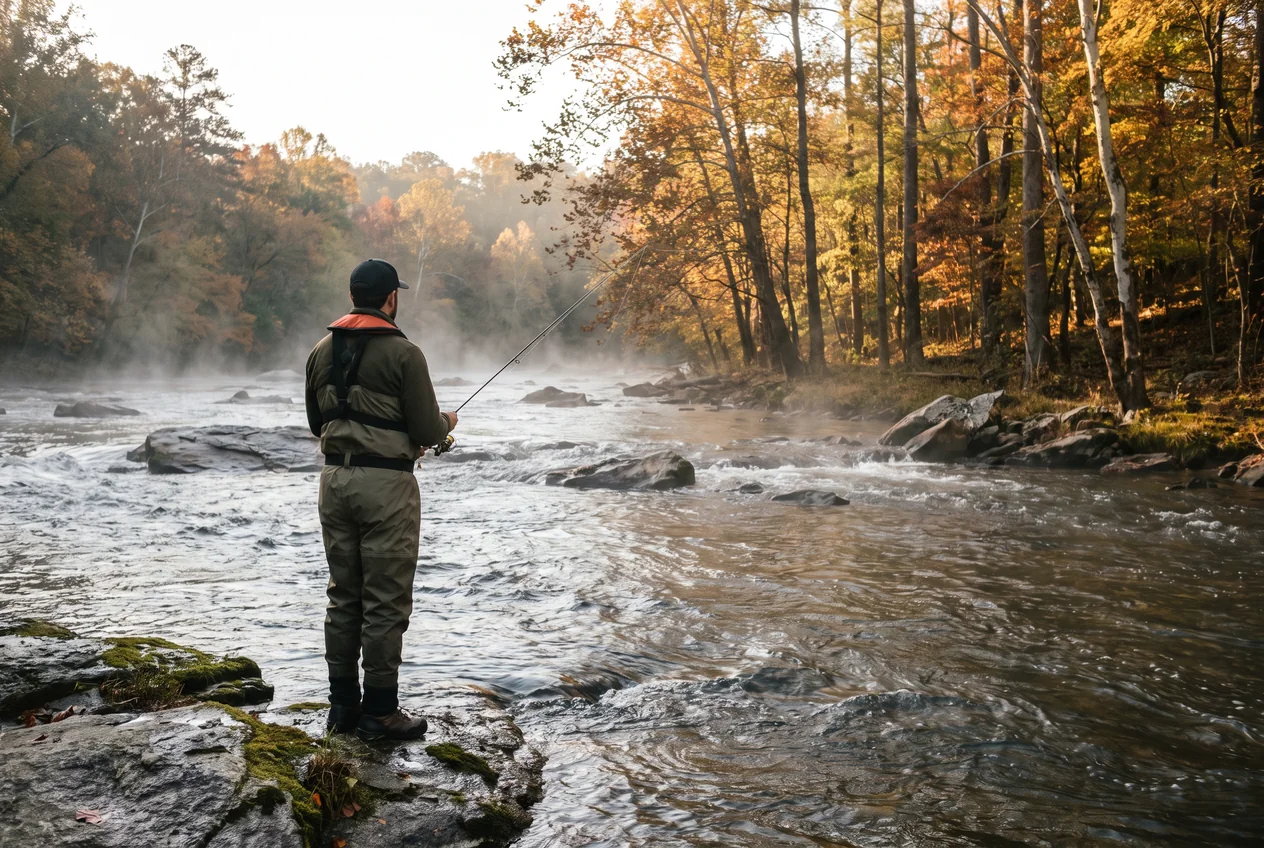
Twenty miles north of downtown, the Chattahoochee comes through Island Ford cold. Buford Dam releases water off the bottom of Lake Lanier at about 50 degrees, and the Georgia DNR manages the river below it as a designated trout stream all the way to Peachtree Creek: 28 miles of year-round water with wild brown trout and stocked rainbows, then a five-mile delayed-harvest stretch the state stocks with 50,000 trout every winter. The National Park Service owns the banks and sells the pass at the Island Ford Visitor Center, $5 a day, cards only. This is the fishing half of a day that never leaves the suburbs. The eating half is at the end, on Canton Street in Roswell, on the road home.
I write the guides on Smells Like Fish, a bait and tackle site, and I am a guest here. Top of Atlanta asked for the water. They supplied the tables.
The day, in order
Leave downtown before light and take 400 north to Island Ford Parkway. Fishing hours on this river run from 30 minutes before sunrise to 30 minutes after sunset, so be at the shoals when the gate opens with a light spinning rod and an inline spinner, because this stretch, from the Highway 20 bridge down to Medlock Bridge, is artificial lures only. Fish the morning, then drive ten minutes west into Roswell for lunch on Canton Street. If you want an afternoon, Jones Bridge in Peachtree Corners is the fly-fishing shoal, and from November through mid-May the delayed-harvest water at Cochran Shoals holds the freshest stocked fish in the metro, all of them released. Dinner is back in Roswell before the drive home. No night fishing anywhere on the river.
What is in the water
Trout, and the rules that come with them. The DNR’s numbers: eight trout a day where harvest is open, one hand-held pole and line, and “it is unlawful to use live fish for bait in trout streams.” From Sope Creek down to Cobb Parkway, from November 1 through May 14, it is delayed harvest: “release all trout immediately” and “only artificial lures with one single hook per lure.” The Park Service adds the licence rule: a Georgia licence at 16 and the trout stamp for every resident 16 to 64 and every nonresident 16 and older. And the Chattahoochee National Park Conservancy adds the one that keeps you alive: anyone wading between Buford Dam and the Highway 20 bridge wears a life jacket at all times, and you call the release line, 770-945-1466, before you fish the upper tailwater, because the river rises fast when the dam generates.
Lake Lanier, above the dam, 41 miles: the DNR’s 2026 forecast puts the biggest stripers, the 2016 year class, “in the 35-inch size range” and “in the mid to upper teens” of pounds, on an annual fingerling stocking program, with the clearest spotted bass water in the state and a 14-inch minimum on both bass. Lake Allatoona, 41 miles northwest: spotted bass are 90 percent of the black bass, with stripers, hybrids, crappie, and channel, blue, and flathead catfish off the Red Top Mountain State Park dock for $5 a car.
Where to fish from shore
- Island Ford, Sandy Springs, 20 miles: park headquarters, the visitor center, and the shoals; year-round trout, artificial lures only, $5 pass.
- Jones Bridge, Peachtree Corners, 25 miles: the fly-fishing shoals, same rules, same pass.
- Cochran Shoals and Paces Mill, 11 to 16 miles: the delayed-harvest section, Sope Creek to Cobb Parkway, 50,000 stocked trout, catch-and-release on single hooks from November 1 to May 14.
- Bowmans Island and the Lower Pool, below Buford Dam, 41 miles: the summer trout water, a life jacket required to wade, the release line first.
- Red Top Mountain State Park, Lake Allatoona, 41 miles: fishing dock and the rocky point at Shelter 7, $5 a car.
- Sweetwater Creek State Park, 18 miles: a mile of creek trail and a pond, $5 parking.
Licences, the stamp, and the pass
Three pieces of paper. A Georgia fishing licence, $15 a year for a resident and $50 a year or $10 a day for a nonresident, at GoOutdoorsGeorgia.com; under 16 fishes free. The trout stamp, $10, required on the Chattahoochee for residents 16 to 64 and nonresidents 16 and older. And the recreation area’s pass, $5 a day or $40 a year, sold at recreation.gov and the Island Ford Visitor Center, cards only, with the America the Beautiful pass accepted. Statewide, black bass are 10 a day at a 12-inch minimum for largemouth (14 on Lanier for both bass), and striped, hybrid, and white bass are 15 combined with only two over 22 inches, with exceptions on named lakes.
The gear side
Which spinner is legal on the artificial-only shoals and which single-hook lure the delayed-harvest section allows, how to read the Buford Dam release schedule before you wade, and what a life jacket built for wading looks like: that is my beat, and it does not belong on a restaurant site. The full Atlanta fishing guide on Smells Like Fish has the map of all nine spots with drive times from downtown, the live tailwater temperature at Buford Dam and the flow near Norcross, the licence and stamp links, the river rules section by section, the Lanier and Allatoona forecasts, and the tackle list.
Where to eat after
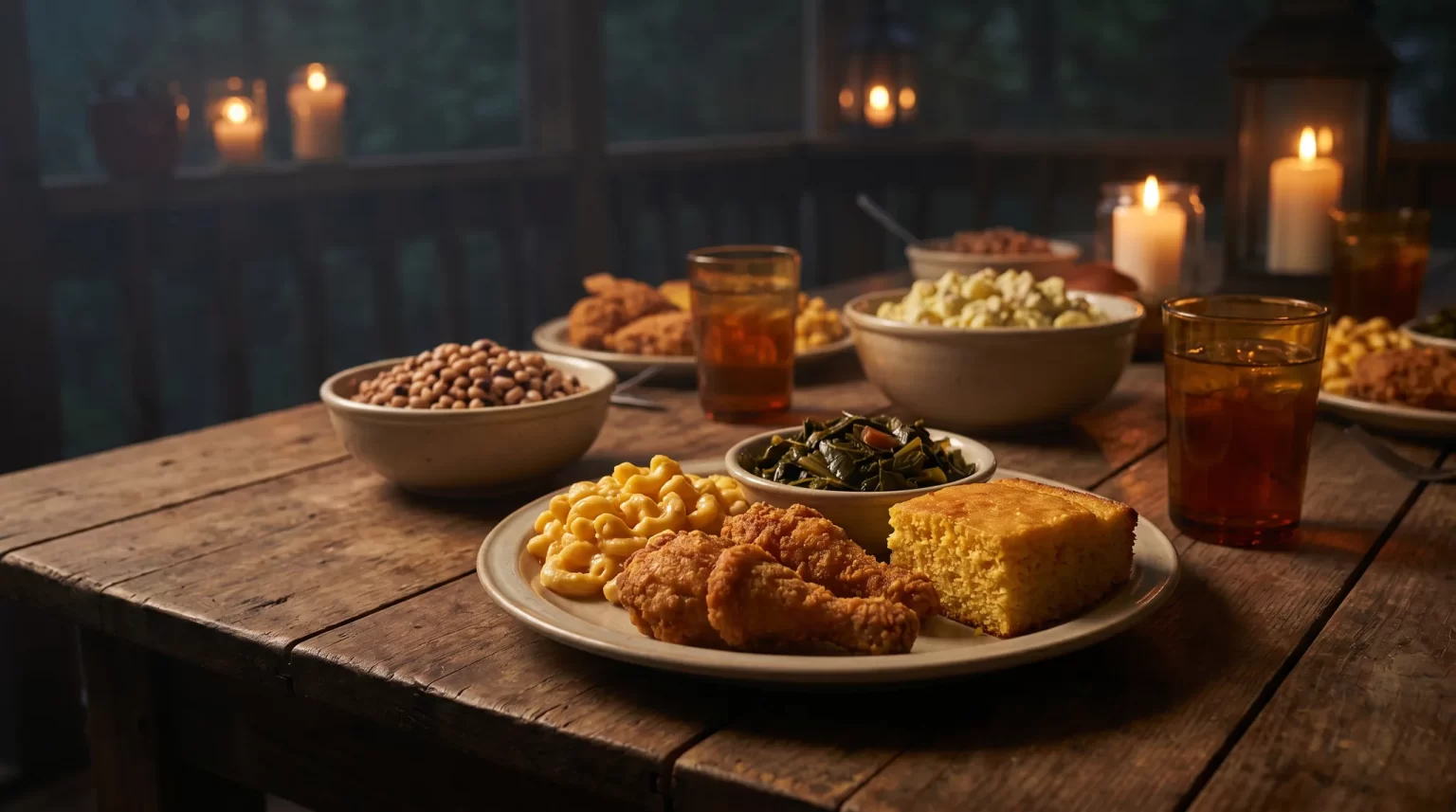
Island Ford Parkway runs back to Roswell Road, and Roswell Road runs into the historic district. These three are on the Top of Atlanta Roswell list. The scores are theirs, not mine.
Sources. Georgia Department of Natural Resources trout and general fishing regulations; National Park Service, Chattahoochee River National Recreation Area fishing and fees pages; Chattahoochee National Park Conservancy on the life-jacket rule, the release line, and the delayed-harvest stocking; Georgia DNR Lake Lanier fishing forecast; Georgia State Parks, Red Top Mountain fishing page; Go Outdoors Georgia licence fees. Drive distances computed on OpenStreetMap roads from downtown Atlanta.
Ray Dodson writes for Smells Like Fish. Ray is the pen name of that site's research desk: every recommendation is built from documented angler consensus, state fish and wildlife guidance, and published testing, with sources named in every article. This piece was written for Top of Atlanta.